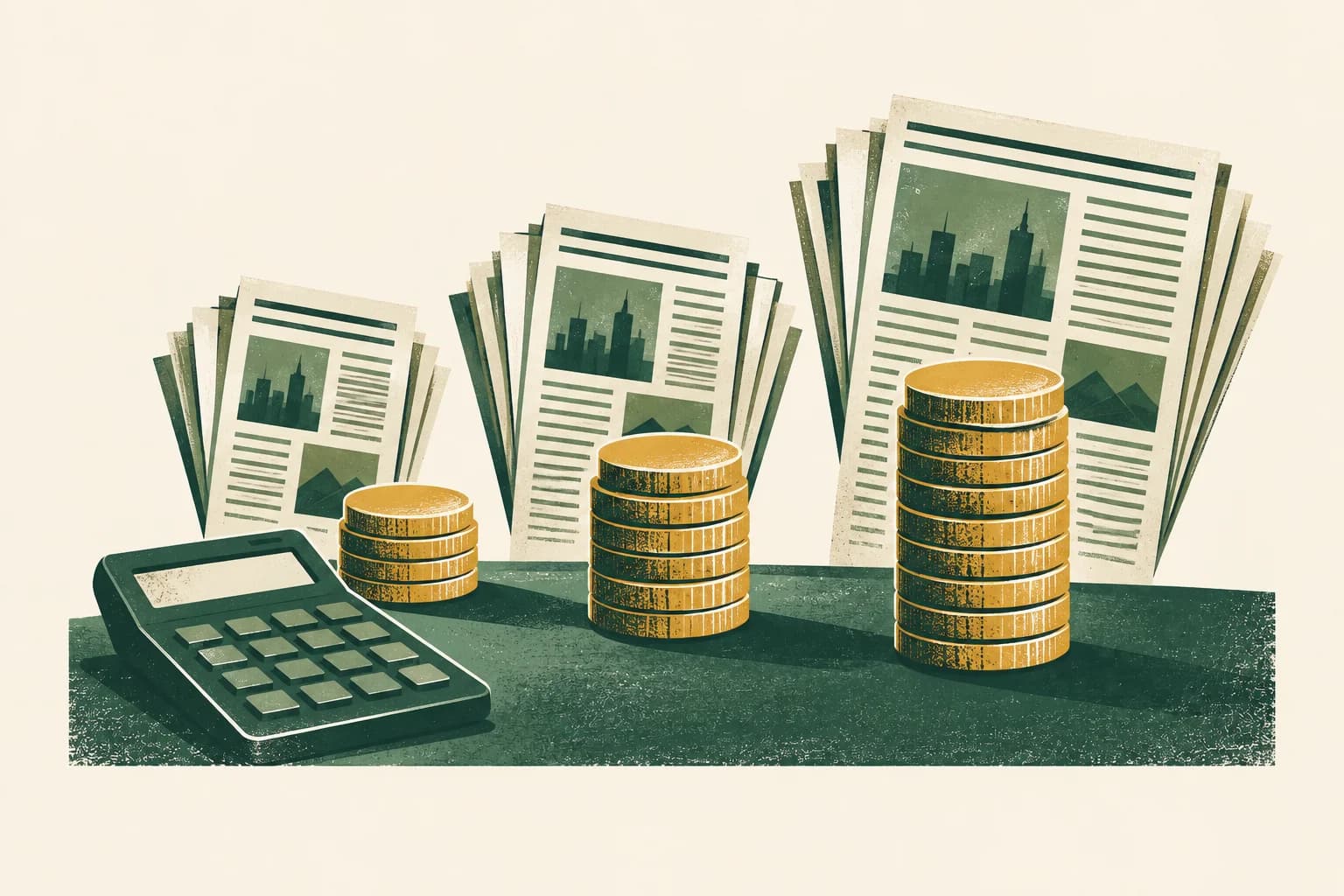
Press release distribution in 2026 costs $149 to $649 at Press Moose, priced by reach: Launch at $149 for 300 or more news sites, Amplify at $299 for 450 or more, and Headline at $649 for 500 or more, with professional writing included in all three.
That sentence answers the pricing question outright. The rest of this guide explains what each band buys, why writing terms move the real price more than most buyers expect, and how to pick a tier without overpaying for reach you will not use.
Why does distribution pricing confuse buyers?
Distribution pricing confuses buyers because headline prices hide different inclusions. One service quotes $195 before writing, another quotes $299 with writing bundled, a third adds flagship outlets as paid extras at checkout. The buyer compares three numbers that measure three different things.
The fix is a simple rule. Compare finished prices: written, published, proven. Ask what the release costs once a professional has written it, it is live on a stated number of sites, and a report proves each placement. At Press Moose those three packages answer that directly: Launch covers the foundation, Amplify adds the national and financial flagships, and Headline reaches the heaviest names in the network.
What does each price band buy in 2026?
Each price band buys a wider network and heavier flagship names. The table below shows the Press Moose tiers side by side.
| Package | Price | News sites | Flagship names |
|---|
| Launch | $149 | 300 or more | Regional and vertical titles, ABC, NBC, CBS and FOX network affiliates, Digital Journal |
| Amplify | $299 | 450 or more | Adds AP News, Business Insider, Benzinga, StreetInsider, Barchart, Digital Journal, GroundNews |
| Headline | $649 | 500 or more | Adds Yahoo News, Nasdaq, Bloomberg, MarketWatch, MSN, Dow Jones, The Globe and Mail |
Three facts hold across all three rows. Writing of up to 800 words with 3 links is included. You approve the draft before anything publishes. Your live report refreshes hourly and lists each page. The price jump between rows buys reach and outlet weight, never basic inclusions held back as upsells.
Why does included writing change the real price?
Included writing changes the real price because writing sold separately adds $40 to $80 or more to any headline quote. Market teardowns show short releases around $40, standard 500-word releases around $60, and long releases around $80, sometimes with revision limits attached.
A $195 headline price plus $60 for writing is $255 before a single placement ships. Against that, a $149 package with writing included is not the budget option. It is the lower finished price with more stated outlets beside it. When you compare any two distributors, add the writing line first, then compare counts. The ranking changes more often than buyers expect.
How do outlet counts map to value?
Outlet counts map to value through proof density and flagship weight, and each count is what releases on that package typically reach. Proof density is the count itself: 300 live pages carrying your headline is a thicker footprint than 100, and your report shows each one. Flagship weight is who sits inside the count: a campaign that includes AP News, Business Insider, Yahoo News, or Bloomberg reads differently in a pitch deck than a long tail alone.
That is why the tiers pair the two together. Launch builds density across regional, vertical, and affiliate titles for a new brand that needs its first wall of proof. Amplify adds national and financial desks for companies speaking to customers and investors at once. Headline concentrates the heaviest financial and national names for launches where the logo row matters most. Match the tier to the audience you need to impress, not to the biggest number on the page. Our network page names every tier so you can check the fit before you pay.
What hidden costs should you look for?
The hidden costs to look for are writing fees, flagship add-ons, revision limits, and vague refund triggers. Writing fees we covered above. Flagship add-ons appear when headline packages exclude the famous names and sell them back at checkout as extras. Revision limits appear when the writing line allows two edits and charges beyond that. Vague refund triggers appear when the wording offers satisfaction instead of stated terms.
Press Moose answers all four in print. Writing is included up to 800 words. Flagships are named per package with no outlet add-ons. Edits continue until you approve. The refund terms are stated: a full refund before writing starts on request, and a free republish for any error we introduce. Our refund terms live in plain English.
Which package should a first-time buyer choose?
A first-time buyer should choose the tier whose flagship list matches the next room they need to win. Selling to local customers and early partners points to Launch at $149. Pitching investors or a national audience points to Amplify at $299 with AP News and Business Insider inside. A flagship launch with press, partners, and a deck riding on it points to Headline at $649.
Budget follows the same logic in reverse. If the Launch list already covers the sites your buyers check, extra reach buys little. If your buyers read financial desks, Launch proof lands softly and Amplify pays for itself in credibility. Start from the audience, read the flagship lists, and the tier picks itself. The examples page shows what finished proof looks like at each level of ambition.
When does paying more cost less?
Paying more costs less when one campaign replaces two. A founder who buys a small package, finds the flagship names missing, and reorders at a higher tier pays twice and waits twice. Buying the tier with the right names first costs less in money and in launch timing.
The same holds for writing. A release written for news desks, search engines, and AI assistants earns its keep across every placement it lands on. Paying once for included writing that ships everywhere beats paying less for distribution and more for words, then watching weak copy underperform on hundreds of pages. Draft within 2 business days, live within 3 to 5 of approval: that is the full timeline at every tier. See how the process runs before you decide.
What does the leanest credible launch cost all in?
The leanest credible launch costs $149 all in. That is the Launch package: written release, 300 or more placements, approval before publishing, hourly live report, badge, and shareable page, with clear refund terms behind it. No writing fee, no outlet add-ons, no revision meter running.
Treat that number as the 2026 baseline for finished, proven distribution. Any quote below it deserves one question: which of the three is missing, the writing, the stated count, or the proof. A lower price with a missing leg is not a bargain. It is a second purchase waiting to happen.