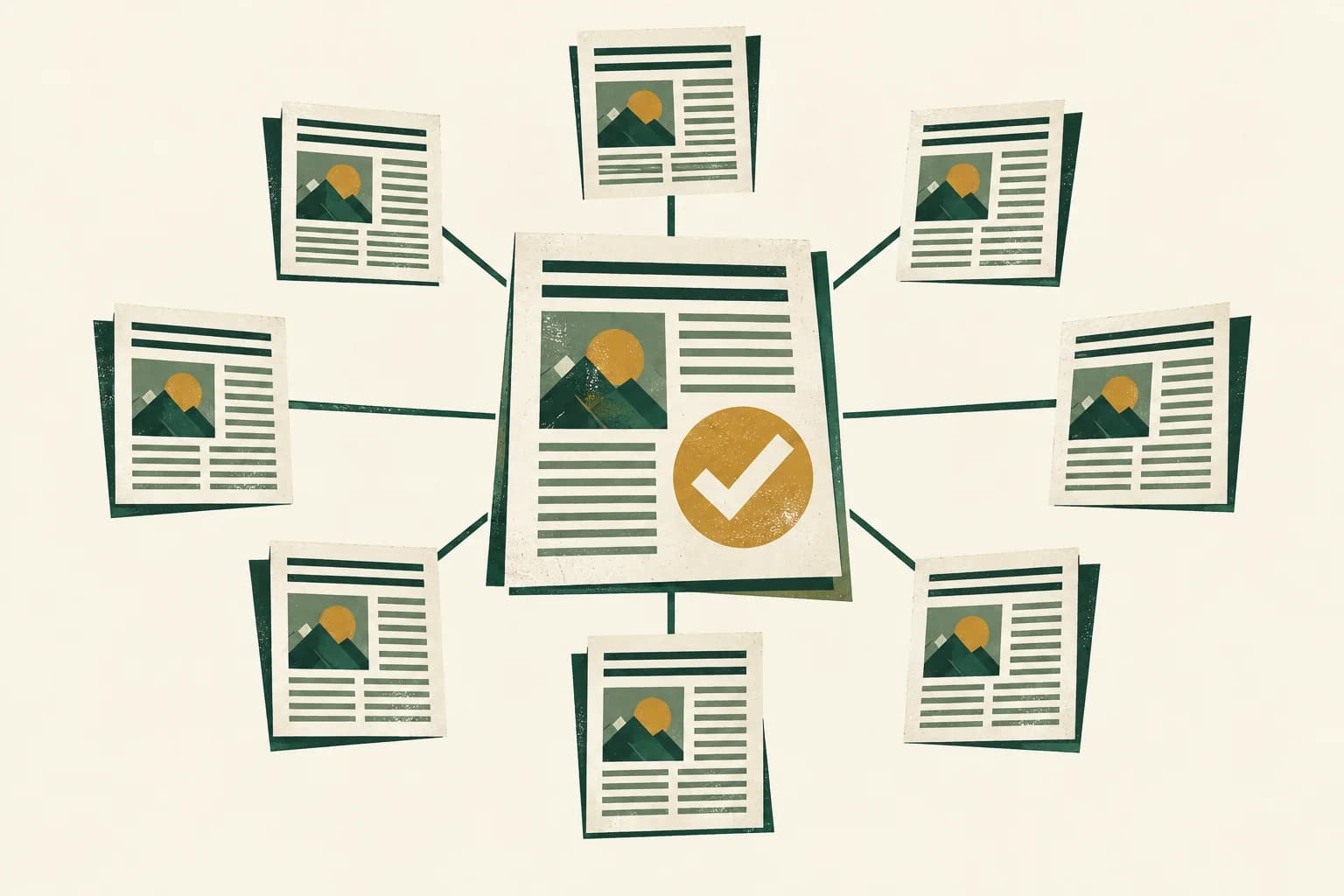
A distributed press release builds visible authority fastest: one brief becomes hundreds of live placements within days, each proven by a live report, while a guest post or listicle earns one placement per pitch.
All three formats have a place. They differ in speed, proof, and effort, and the honest comparison below shows where each wins. Founders choosing their first authority spend should read it before committing weeks to a format that returns a single link.
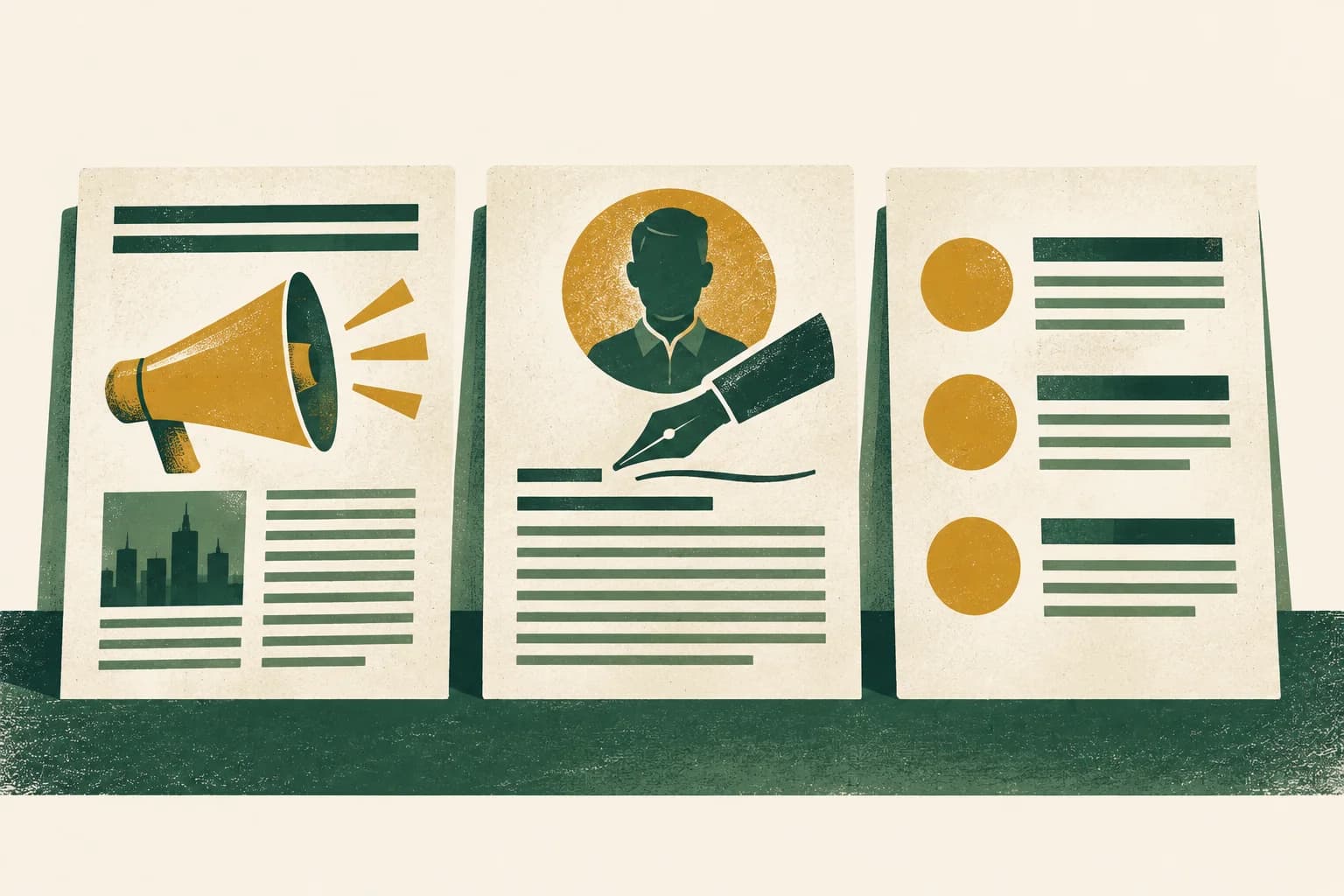
Each format produces a different shape of proof. A distributed press release produces your story as dated pages across 300 to 500 or more news sites, with a report listing every URL. A guest post produces one bylined article on one publication, carrying your argument and usually one link. A listicle produces your brand named inside a roundup, often without a link you control.
Think in units. The release deals in hundreds of pages per order. The guest post deals in one page per pitch cycle. The listicle deals in a mention inside someone else page. For a new brand with no proof wall at all, hundreds of pages in a week changes the homepage, the deck, and the ad account at once. That is the gap the comparison below measures.
How do the three compare side by side?
The three compare cleanly on five rows that buyers feel directly.
| Factor | Press release | Guest post | Listicle |
|---|
| Time to live | Days: draft in 2 business days, live in 3 to 5 | Weeks of pitching plus edits | Weeks of outreach, timing not yours |
| Placements per effort | 300 to 500 or more per brief | One per accepted pitch | One mention per inclusion |
| Writing load | Included, up to 800 words | You write 800 to 1,500 words | You pitch the blurb |
| Proof | Live report with every URL, badge, shareable page | The article URL alone | The roundup URL alone |
| Entry cost | $149 finished with writing | Free to pitch, dear in hours | Free to pitch, dear in hours |
The pattern is consistent. Releases convert money into proof fast. Guest posts and listicles convert hours into single placements slowly. A founder with more budget than spare weeks should weight the table accordingly.
When does a guest post win?
A guest post wins when depth matters more than breadth. A 1,200-word argument under your name on a respected industry title shows expertise no 500-word announcement can. It ranks for its topic, circulates among peers, and opens doors to podcasts and panels.
Guest posts also suit founders who write well and enjoy it. If the draft is already in you, pitching costs little beyond patience. The mistake is treating guest posting as the fast path to a proof wall. One acceptance per month is a good run, and twelve months of good runs still totals twelve pages. Compare that with a single Amplify campaign at $299: 450 or more pages, AP News and Business Insider inside, live within days of approval.
When does a listicle mention win?
A listicle mention wins when buyers compare options in one place. Best-of roundups catch shoppers mid-decision, and a slot with your name beside established brands borrows their trust for the length of the scroll.
The catch is control. Inclusion sits with the publisher, the blurb is theirs, the link may or may not appear, and the slot can vanish in the next refresh. Treat listicles as welcome windfalls: pitch them, celebrate them, screenshot them. Never plan a launch around one. Plan the launch around coverage you can schedule, then let roundups amplify it.
Why do releases pair well with both?
Releases pair well with both because proof opens doors. A guest post pitch that links a live report with hundreds of placements reads differently from a cold pitch with no footprint. An editor checking your brand finds dated pages on recognised outlets, a shareable proof page, and a coherent story. The release is the credential that makes the slower formats faster.
Sequence them this way. Month one: the release builds the wall. Month two: pitch guest posts that cite the coverage. Ongoing: chase listicles with the badge on your homepage doing quiet work in the background. Each layer cites the last, and the founder who started with zero proof ends the quarter with depth and breadth both.
You judge success across formats with one shared yardstick: openable proof per week of effort. A release returns hundreds of pages per brief within days, each row checkable in the report. A guest post returns one strong page per pitch cycle. A listicle returns a mention inside another page on someone else schedule.
Run that math on your own calendar and the portfolio builds itself. Fast proof first, because launches and raises have dates. Depth second, because expertise compounds over quarters. Mentions throughout, because roundups reward brands that already look established. Measure pages per week and you will rarely misallocate again.
What does the finished portfolio look like?
The finished portfolio looks like three layers with one story running through them. The base layer is release coverage: hundreds of dated pages, flagship names, a badge on the homepage, a shareable report page. The middle layer is two or three guest posts that argue your view in depth. The top layer is listicle mentions caught in passing and added to the deck.
A buyer checking you finds the same facts everywhere, phrased for each format. That consistency is the authority itself. No single format builds it alone, but the release builds the base in days while the slower layers stack over quarters.
What should a first-time budget buy?
A first-time budget should buy the release first. At $149, Launch delivers 300 or more placements with writing included, approval before publishing, and the minimum-count promise. No other $149 in marketing produces hundreds of pages with your headline on them.
Add guest posts once the wall exists and you have something to point editors toward. Add listicle outreach as a standing habit, low effort, occasional wins. Revisit the release tier as the audience grows: Amplify at $299 when investors enter the picture, Headline at $649 when the logo row has to carry a flagship launch. Speed first, depth second, mentions always.