• Mobile apps
  • App launches
  • Games

For mobile app makers

Press release for a mobile app,written by editors and published on 300+ news sites

Press Moose's editors write the release from a short brief, and it is published on 300+ news sites, from $149.

  • Editors write the release for you. You approve the final text before anything publishes.
  • You pay once per release. Launch $149, Amplify $299, Headline $649. No monthly fee.
  • Every package has a minimum count. A shortfall on the minimum is refunded in full.

From $149 one-off · Writing included · Minimum outlet count or every dollar back

Headline package500+ news sites at minimum

Pedalwren

Pedalwren launches on iPhone and Android with bike routes that keep to protected lanes and trails

MINNEAPOLIS · November 10, 2026

Yahoo Finance
Business Insider
AP News
USA Today
The Globe and Mail
Benzinga
news sites at minimum on Headline
500+
news sites at minimum on Headline
Launch price, writing included
$149
Launch price, writing included
in every release
3 links
in every release

These outlets are the ones releases typically reach, and they differ by package.

Yahoo Finance
Business Insider
AP News
USA Today
The Globe and Mail
Benzinga
NewsBreak
StreetInsider
Boston Herald
Star Tribune
International Business Times

Each count is a minimum, backed by a full refund if a release misses it; the named outlets are the ones releases typically reach, and every outlet decides what it runs.

What an order includes

What an app maker gets from one order

Press Moose's service covers the writing, the approval, the publication and the live report for one printed price, from $149.

  1. 800 words

    The writing is in the price

    You fill in a short brief, and our editors write the release, up to 800 words. A draft you already have is edited for the same price.

    Writing included in every package

  2. Unlimited edits

    You approve it first

    The final text goes out only after you approve it, with unlimited edits before approval.

    Approval before anything publishes

  3. 300+ placements

    Minimums or a refund

    News sites: 300+ on Launch, 450+ on Amplify, 500+ on Headline. Fewer live placements on the report 14 days after the release first goes live mean a full refund.

    Minimum count, refund behind it

  4. Hourly

    Live placement report

    The live report lists every outlet, every live URL and every publish date, refreshed hourly while the release is going live.

    Every placement listed

Packages and prices

All three packages take app news

App news is company news, and Press Moose's three packages take it within the limits on Press Moose's terms page: Launch at $149 on 300+ news sites, Amplify at $299 on 450+ news sites and Headline at $649 on 500+ news sites.

Launch

New brands earning recognition from day one

$149

300+ news sites minimum

Typically reaches:

Boston Herald
Star Tribune
International Business Times
WRAL
WKOW
KUTV

WRAL, WKOW and KUTV are local NBC, ABC and CBS stations. Every package also reaches the business pages of about 20 local ABC, NBC, CBS and FOX stations.

  • Live on 300+ news sites
  • Written by our team (up to 800 words)
  • 3 links to your site
  • Your approval before anything publishes
  • Live placement report refreshed hourly
  • White-label report

Amplify

Most popular

Growing brands borrowing trust at scale

$299

450+ news sites minimum

Adds national mastheads:

Business Insider
USA Today
AP News
Benzinga
NewsBreak
StreetInsider
  • Live on 450+ news sites
  • Written by our team (up to 800 words)
  • 3 links to your site
  • Your approval before anything publishes
  • Live placement report refreshed hourly
  • White-label report
  • High-authority outlet tier

Headline

Brands going big on lasting recognition

$649

500+ news sites minimum

Adds top financial desks:

Yahoo Finance
The Globe and Mail
  • Live on 500+ news sites
  • Written by our team (up to 800 words)
  • 3 links to your site
  • Your approval before anything publishes
  • Live placement report refreshed hourly
  • High-authority outlet tier
  • White-label report
  • Priority turnaround
  • Consultation on the angle

What to announce

Six kinds of app news worth a release

These are kinds of news an app maker announces, and each is company news that Press Moose's packages take, within the limits on Press Moose's terms page.

  1. A new app launch

    Give the launch date, what the app does and who it is for, which devices it runs on, where to get it, and whether it is free. The release links to where to get the app: the store listing, or the app's own page.

    “Pedalwren launches bike commute planner across 12 US cities”

  2. A launch on a second platform

    Name the new platform and the date it arrives, and say where to get the app there.

    “Language learning app arrives on Android one year after iPhone”

  3. A major new version

    Say what the new version adds, the date it is out, and what any paid tier costs.

    “Pedalwren 2.0 adds group ride planning for bike commuters”

  4. A download or user milestone

    Give the number with its date and its source, so a reader can check it.

    “Pedalwren riders log 61,000 commutes in five months”

  5. A funding round

    State the date, what the company does, and what the round pays for next.

    “Pedalwren raises new funding to add more US cities”

  6. A partnership or integration

    Name the partner, what the two products do together, and the date it starts.

    “Pedalwren partners with a city bike program on safer routes”

Ready to announce your app news

The brief is a short form that takes minutes, and the launch date goes in it so the work is planned around it. The draft arrives within 2 business days.

Kinds of app company

Find your kind of app company

Press Moose's packages fit a developer or company with a dated piece of app news, such as a launch, a new platform, a new version, a milestone, a funding round or a partnership. They fit someone with at least one fact a reader can check, who wants the release written for them and published for a printed price.

Launches and milestones

Independent developers and startups

A consumer app maker typically announces a launch, a launch on a second platform, or a download or user milestone. This is often a first release with nothing written yet, so the brief and the writing matter most.

3 links: the homepage, the app's own page with the store buttons, and the press kit page.

Launches and updates

Mobile game studios

A game studio typically announces a launch, a milestone or a major content update. The limits, as our terms print them: gambling and betting (casinos, sportsbooks, lotteries, betting tips or odds) are refused on every package, and the terms list crypto wording that is refused, such as play-to-earn.

3 links: the studio's homepage, the game's store listing on the App Store or Google Play, and the press kit page.

Versions and integrations

Business and workplace apps

A business app maker typically announces a major new version, an integration with another product, or customer figures. A finance app's news is a financial-services release, which the Headline package does not take.

3 links: the company homepage, the business app's product page, and the press kit page.

First app launches

Companies adding an app

A retailer, a clinic or a marketplace announces the app launch as company news, and the new app page is a linked page that must be live.

3 links: the company homepage, the page for the new app, and the press kit page.

Who this service is for

  • An independent developer or small studio with a launch coming
  • A startup announcing a funding round, a partnership or a milestone
  • A company launching its first app
  • An agency or app studio ordering for a client, which gets the placement report with our branding removed
  • $149, $299, $649

    Three packages

    Launch costs $149, Amplify $299 and Headline $649, one payment per release with no monthly fee.

  • 300+, 450+, 500+

    News site minimums

    Each count is a minimum: 300+ on Launch, 450+ on Amplify and 500+ on Headline.

  • 2 business days

    Timing

    The draft comes within 2 business days of the brief; publication follows within 3 to 5 business days of approval.

  • 800 words

    Written for you

    Our editors write up to 800 words with 3 links, and you approve the final text.

Where the links point

A release written by Press Moose's editors carries 3 links, and the brief asks for them. One of the three can be the app's store listing on the App Store or Google Play.

  1. The homepage

    Who makes the app

    We suggest linking the homepage so a reader can see who makes the app. Check that it is live and finished before you send the brief.

    In the releasePedalwren

  2. Where to get the app

    The store listing or the app's own page

    Link the app's store listing on the App Store or Google Play, or, for an app on both stores, the app's own page that carries both store buttons, as the Pedalwren release does. The store buttons on such a page are where Apple's and Google's badge guidelines apply, and the guide lower on this page covers them.

    In the releasethe Pedalwren app page

  3. The press kit page

    Screenshots, the icon and a fact sheet

    A press kit is a page holding screenshots, the app icon, logos and a short fact sheet. We do not suggest putting images in a press release, because a news site can reject a release over its images, so the screenshots and the app icon live in the press kit and the release links to it.

    In the releasepress kit

Your website and every page the release links to, a store listing included, must be live and finished; a coming soon or unfinished page means the release is refused.

The release

A launch release for a mobile app, in full

The Pedalwren release below is a press release for a mobile app of the kind Press Moose's editors write from a brief.

MINNEAPOLIS, November 10, 2026

Pedalwren launches on iPhone and Android with bike routes that keep to protected lanes and trails

Pedalwren, an app that plans a bike commute, launched today on iPhone and Android. The app plans a route to work that keeps to protected bike lanes and trails where a city has them, and it shows what share of each route is separated from cars.

Pedalwren grew out of a beta, a test version used before launch. From June to October 2026, 1,200 riders used the app and logged 61,000 commutes. The app covers 12 US cities at launch, among them Minneapolis, Chicago, Denver and Portland, Oregon.

"Riders told us the fastest route on a map was often one they would not ride, and what they asked for was the calm one," said Maya Lindqvist, co-founder and chief executive of Pedalwren.

Pedalwren is free to download, and Pedalwren Plus, which adds offline maps, costs $3.99 a month. Pedalwren is available on the App Store for iPhone and on Google Play. The app is available in the United States. The store buttons sit on the Pedalwren app page, and screenshots, the app icon and a fact sheet are in the press kit.

About Pedalwren: Pedalwren, of Minneapolis, Minnesota, is an app that plans a bike commute, built so a rider can see how much of each route is separated from cars.

Contact: [email protected]

Links included

  • Pedalwren· The homepagehttps://pedalwren.example
  • the Pedalwren app page· Where to get the apphttps://pedalwren.example/app
  • press kit· The press kit pagehttps://pedalwren.example/press
  1. A dated event

    The news is a dated event: Pedalwren launched on iPhone and Android on November 10, 2026.

  2. Where to get it

    The release says where to get it: Pedalwren is available on the App Store for iPhone and on Google Play. The app is free to download. Pedalwren Plus adds offline maps and costs $3.99 a month. The app is available in the United States.

  3. Proof a reader can check

    Proof a reader can check: 1,200 riders logged 61,000 commutes in a beta, a test version before launch, from June to October 2026, and the app covers 12 US cities at launch.

  4. One quote

    One quote: Maya Lindqvist, co-founder and chief executive, on why riders asked for the app.

How an order runs

From brief to report in four steps

An order with Press Moose runs from a short brief to a live report: a draft within 2 business days of the brief, and live within 3 to 5 business days of approval.

  1. Minutes

    Fill in the brief

    The brief is a short form: what happened, why it matters, who it helps, and the links. The launch date goes in the brief, and the work is planned around it. If you already have a draft, send it with the brief and our editors edit it for the same price.

  2. 2 business days

    Our editors write the release

    Our editors write up to 800 words with 3 links, and the draft arrives within 2 business days of the brief.

  3. Before publication

    You approve the final text

    Edits are unlimited before approval, and nothing is published until you approve the final text.

  4. 3 to 5 business days

    Live and reported

    The release goes live within 3 to 5 business days of approval: it is published as a dated page carrying its headline, body and links on each news site. While the release is going live, the placement report is refreshed hourly and lists each outlet, its live URL and its publish date.

  • One payment per release, with no monthly fee.
  • The placement report is refreshed hourly while the release is going live.
  • Every package's As seen on badge shows the logos of the outlets that published the release.
  • Your website and every linked page must be live.

Refund terms

The refund behind every minimum count

If, 14 days after the release first goes live, the report lists fewer live placements than the package's minimum, the order is refunded in full: 300+ on Launch, 450+ on Amplify and 500+ on Headline.

  1. Before writing starts

    Ask for a refund before writing starts and the payment is returned in full.

  2. A declined brief

    If a brief is declined after payment, the payment is refunded in full.

  3. An error we introduce

    A typo, a wrong link or a formatting fault we introduce is republished free.

Refunds go to the original payment method. The counts are minimums, and each outlet decides what it runs. Publication does not promise downloads, installs, a place in a store's charts, featuring by Apple or Google, a review, coverage by a journalist, search rankings or mentions in AI answers.

The guide

What goes into a press release for a mobile app

Press Moose's guide below covers what a press release for a mobile app says, what eleven app press releases printed, what Apple and Google ask when an announcement names their stores, when to send one, and what two news sites say about press releases and app reviews.

What a press release for a mobile app says

A press release for a mobile app states one dated piece of news about the app, then gives the facts a reader needs to understand that news without going looking for them. The news can be a new app launch, a launch on a second platform (for instance on Android after iPhone), a major new version, a download or user milestone, a funding round, or a partnership or integration with another company's product. Some releases carry two of these at once, such as a funding round announced together with a new app.

Whatever the event, the release answers the same questions. Our own checklist for an app release is built so that a reader does not have to go looking. The release says what the app does and who it is for, in one plain sentence, and it gives the date of the news. It says which devices the app runs on and where to get it, with a link to the store listing or to the app's own page. It says whether the app is free and what any paid tier costs, and it names the countries where the app is available.

The release carries one quote from a named person, so the news has a voice behind it. It carries one number a reader can check, with its date and where the number comes from. It points to a press kit, a page or folder holding screenshots, the app icon, logos and a short fact sheet. We do not suggest putting images in a press release, because a news site can reject a release over its images, so screenshots and the app icon go in the press kit, and the release links to it. And it ends with a contact, so a question about the news can reach a person.

Every fact on this list is something the app maker already knows. The work is putting them in one place, in plain words, on a dated page.

What eleven app press releases printed

Six of eleven press releases about mobile apps named a store where the app could be downloaded, and none printed a price for the app. The eleven were published between March 2 and November 10, 2026. We read them on November 14, 2026. We picked them to cover different kinds of news: three new app launches, one major new version, one launch on a second platform, three download milestones, one funding round that also announced an app, and two partnerships.
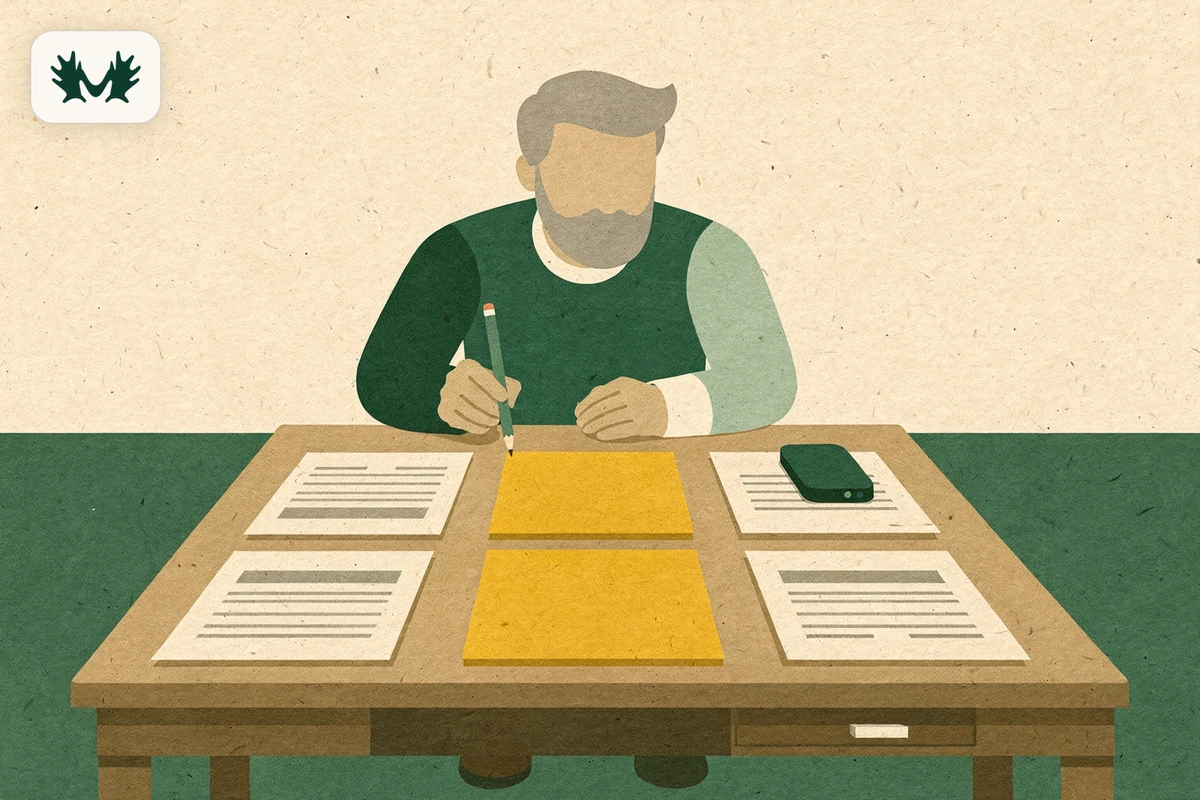
Illustration of a man with a pencil reading printed press releases laid out on a table beside a phone

Six of the eleven named a store where the app could be downloaded. Two of those six wrote "Apple App Store". Five of the eleven used the word "iOS". None gave the oldest operating system version the app runs on, and none carried a trademark credit line for Apple or for Google.

Nine quoted a named person. The two that did not were a launch on a second platform and a download milestone. Five said the app, or one tier of it, is free. None printed a price for the app.

Four gave a download or user count: three gave download totals, and one gave a monthly user figure that carried its date. One release claimed to be the most downloaded app of its kind in its country, and it named the data source and the date range behind the claim. One printed the web addresses of its store listings. One pointed readers to press materials, with a link to more assets and a link to a video. One closed with a fact list: price, platforms, region and release date, each on its own line.

What Apple and Google ask when an announcement names their stores

Apple and Google each publish guidelines for developers who market an app. Apple's guidelines cover how its store and devices are named, and Google's cover its badge. These pages speak of marketing communications, marketing materials and marketing campaigns, and neither page names press releases. Neither page prints a date, and both were read on November 14, 2026. This page reports what the guidelines say and gives no legal advice.
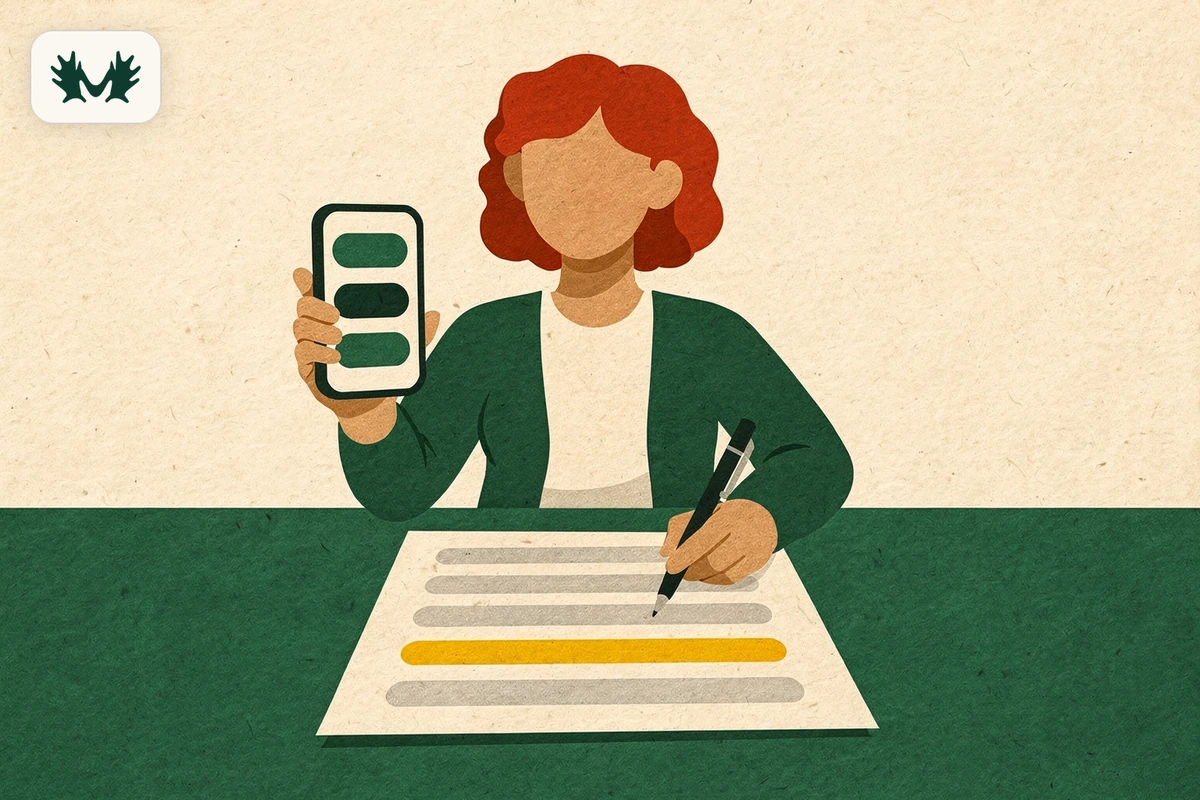
Illustration of a woman holding a phone that shows two store buttons while she marks one line of a press release

Apple's App Store marketing guidelines cover the store's name. The name stands on its own, with no other descriptors added to it. In Apple's words: "don’t say iTunes App Store, Apple App Store, or iPhone App Store." The same passage says it is correct to say an app is available on the App Store or can be downloaded from the App Store, and that only the article "the" goes before the name.

On devices, Apple's guidelines ask for product names rather than operating system names: "Refer to the correct product names your app supports, and avoid referring to iOS, macOS, tvOS, or watchOS in your marketing communications." The same passage says not to call Apple devices smartphones or tablets, and to use the product names, iPhone and iPad.

Apple's guidelines also ask for credit lines in all communications worldwide. A credit line lists the Apple trademarks and products the communication includes, and it is placed once, wherever legal notices are given. The guidelines print the formats for these lines and point to Apple's trademark list for the right term for each mark. The Pedalwren release on this page prints no credit line, and whether a press release needs one is a question for Apple or a lawyer.

In communications distributed only in the United States, Apple's guidelines ask for the trademark symbol after each Apple trademark the first time it appears in the running text, and never in a headline. For communications that will go outside the United States, the guidelines say not to use the symbols.

Apple's guidelines ask for the App Store badge in digital and printed marketing materials, one badge per layout, using only the artwork Apple provides. Where badges for other app platforms sit beside it, the guidelines ask that the App Store badge come first. The place those badges belong is the app's own page, the one a release links to.

The eleven releases we read for this page varied on the store's name and on device names. Two of the six that named a store wrote "Apple App Store", five of the eleven used the word "iOS", and none carried a trademark credit line for Apple or for Google.

Google's Google Play badge guidelines cover the badge rather than the name. The guidelines say the badges are for marketing campaigns that promote content on Google Play. Where the Google Play badge sits with other app store badges, the guidelines ask that it be the same size or larger than the others. When a campaign is in a language other than English, the guidelines ask for the localized badge.

These guidelines sit alongside the agreements a developer has with Apple and with Google. A developer who needs a ruling on their own materials asks the platform or a lawyer.

When to send an app press release

An app press release is ordered once the date of the news is fixed, and with Press Moose the launch date goes in the brief, so the work is planned around it. A draft comes within 2 business days of the brief, and the release goes live within 3 to 5 business days of approval. Every page the release links to must be live. For an app, that rule covers every page the release points to: the app's store listing on the App Store or Google Play, as well as the app's own page on the company's site and its press kit. They are finished and public, because a release whose website or links show a "coming soon" or unfinished page is refused. Our page on how an order works goes through each step, from brief to publication.

The stores have their own tools for timing, and a release may refer to what those tools set up. On Apple's side, a brand-new app can be offered for pre-order, which lets people order the app before its release day. The release day can be 2 to 180 days after the pre-order is published, and the pre-order can go up once Apple has reviewed the app. Apple advises care with that date in marketing: "If there’s a chance this date will shift, we recommend that you don’t include this date in your marketing efforts." On release day, Apple asks developers to update their marketing materials to say the app is now available to download on the App Store.

Apple also gives developers a way to put the app in reporters' hands early. Promo codes give press and influencers early access, and they are set up in App Store Connect, Apple's site where developers manage their apps. A developer can give out up to 100 codes per version of the app, per platform.

A developer can also tell Apple's editorial team about a launch, new content or an app enhancement through Featuring Nominations in App Store Connect. Apple asks for a minimum of two weeks' notice and recommends up to three months for wider featuring. Apple says there is no checklist of requirements for getting featured.

Google's tool is pre-registration, letting people sign up for an app on Google Play before it launches. A pre-registration campaign can last 90 days, after which the app has to launch, and Google recommends turning it on 3 to 6 weeks before the planned launch date and before any marketing for it starts. Google's help page lists press articles among the channels a developer can use to send people to the pre-registration listing. Pre-registration is set up in Play Console, Google's site where developers manage their apps.

These are the platforms' tools, set up by the developer in App Store Connect and Play Console.

What two news sites say about press releases and app reviews

A press release and an app review reach a news site by different routes. TechCrunch's tips page, last updated April 18, 2024, gives an email address for a press release or a pitch. MacStories' about page says it writes about an app only after testing it personally, and that it uses its own screenshots unless it cannot for privacy reasons.

A review is something a developer asks a site for directly, and a site that tests apps itself needs the app in hand, which is what Apple's promo codes for press are for. A published press release is a different thing: the dated, public statement of the facts, which a developer can link to when writing to a reporter. Our post on how to send a press release covers who to send one to.

Common questions

Questions about a press release for a mobile app

Press Moose's answers cover what a press release for a mobile app includes, what it costs, which apps the packages cannot take, when to send it, and what it does for a launch.

Have another question about your app? Contact us and we will answer it.
What should a press release for a mobile app include?

A press release for a mobile app includes what the app does and who it is for, in one sentence; the date of the news; the devices the app runs on and where to get it, with a link to the store listing or to the app's own page; whether the app is free and what any paid tier costs; and the countries where it is available. It also carries one quote from a named person, one number a reader can check with its date and its source, a pointer to a press kit with screenshots and the app icon, and a contact.

How much does a press release for a mobile app cost?

With Press Moose, one press release costs $149 on the Launch package, $299 on Amplify or $649 on Headline, and the writing is included in the price. The Launch package reaches 300+ news sites, Amplify reaches 450+ and Headline reaches 500+, and each count is a minimum. Every package includes a live placement report listing every outlet, every live URL and every publish date, refreshed hourly while the release is going live. There is one payment per release and no monthly fee.

Which apps can Press Moose's packages not take?

Press Moose's terms refuse some categories on every package, whatever the news. The refused categories an app is most likely to fall in are gambling and betting, such as a casino, sportsbook, lottery or betting tips app; adult content; alcohol, tobacco and vaping; and cannabis. Also refused on every package are firearms, high-risk finance such as trading products sold with profit claims, device jailbreaking and pirated software, psychics and tarot, and deepfake AI. Press Moose's Headline package takes no financial-services release and no blockchain release, so news from a banking, lending, investing or other financial-services app goes on the Launch or Amplify package. Payday and short-term loan apps are refused on every package. A crypto or blockchain app's project news is accepted on the Launch and Amplify packages only, and it is reviewed case by case. Press Moose's terms list the crypto wording that is refused, such as play-to-earn. The full list of refused categories is on Press Moose's terms page. An app maker who is unsure can contact Press Moose before ordering to find out whether the news can run.

When should an app press release go out?

An app press release goes out once the date of the news is fixed. The launch date goes in the brief with Press Moose, a draft arrives within 2 business days of the brief, and the release is published within 3 to 5 business days of approval. Every page the release links to must be live. Apple's advice on dates is for developers who offer an app for pre-order, and it is about that pre-order's expected release date: if there is a chance the date will shift, leave the date out of the marketing.

What does a press release do for an app launch?

A published press release puts the launch facts on dated public news pages beyond the company's own site, which a reporter, a partner or a user can open. With Press Moose, the release is written by Press Moose's editors and published as dated pages, each carrying its headline, body and links, on a stated minimum number of news sites: 300+ on the Launch package, 450+ on Amplify and 500+ on Headline. Google and AI platforms decide what they index and display, and publication does not promise downloads, installs, a place in a store's charts, featuring by Apple or Google, a review, coverage by a journalist, search rankings, or mentions in AI answers. An As seen on badge for the app maker's own site shows the logos of the outlets that published the release. Every published page is listed on a public report page, which lets buyers, partners or journalists check the record themselves at any time.

Order your release

Get your app news written and published

Choose Launch at $149, Amplify at $299 or Headline at $649. The writing is included, and you approve the final text before anything is published.

From $149 one-off · Unlimited revisions before approval · Minimum placement count or full refund